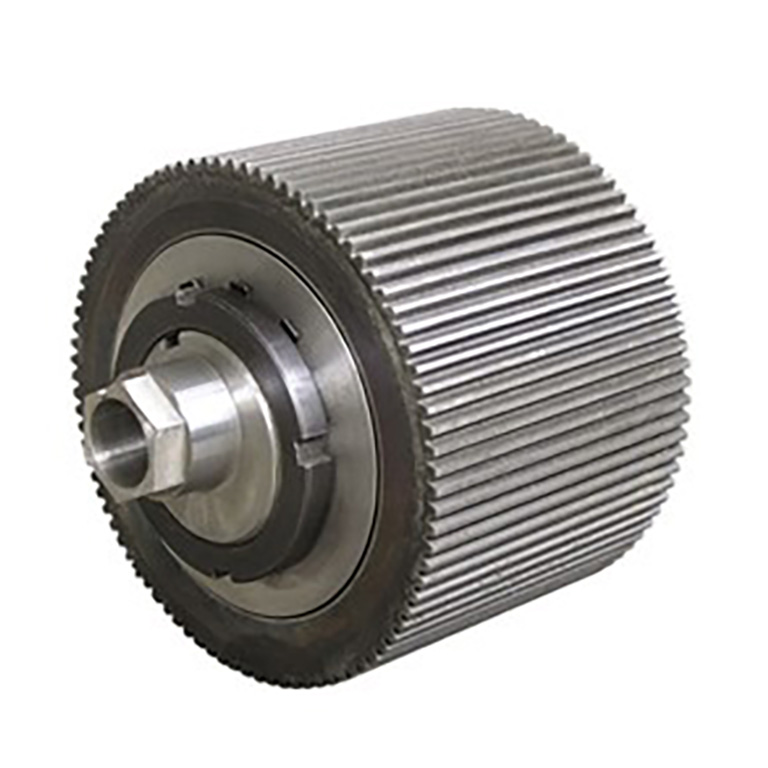




The roller (or roller assembly) is one of the critical and consumable components in Pellet Mills, used for producing feed for livestock, poultry, and aquaculture.
Here’s a summary of what you need to know about rollers:
Main Function of the Roller
The roller works in conjunction with the die. Its primary function is to apply mechanical pressure to the softened feed mash, forcing it through the die’s holes and forming it into compressed cylinders known as pellets. Without precise pressure from the rollers, the pellets will either not form correctly or will have a brittle structure, leading to excessive fines production.
Key Technical Points for Better Performance
- Roller-to-Die Gap: This is one of the most crucial machine adjustments. If the gap is too small, the roller and die will experience premature wear. If the gap is too large, insufficient pressure will be applied to the material, and the production capacity will decrease.
- Roller Surface (Corrugated or Smooth):
- Corrugated Rollers: Used to prevent slippage on the die surface and provide better traction, especially for feeds that require more friction.
- Smooth Rollers: Typically used for specific feeds that require a finer finish or to reduce direct pressure on the die.
- Material and Lifespan: As rollers operate under extreme pressure and high temperatures, they are constructed from hardened alloy steels. Wear on the roller surface (the roller shell) is inevitable, and it is recognized as a wear part that must be replaced periodically.