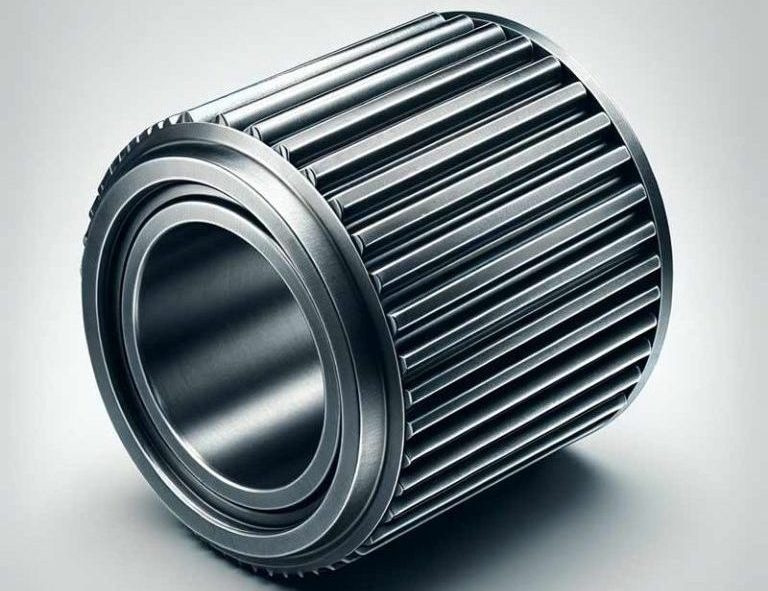




In the context of Pellet Mill machines, when referring to the “shell,” we mean the main, outer part of the roller.To understand this better, consider the roller as a pipe or cylinder with two primary sections:
- Core/Shaft: The central, axial part that rotates the roller and is responsible for power transmission.
- Shell: The layer that encases the core, serving as the primary contact surface with the raw material (feed).
Here are the technical details related to the “roller shell”:
1. Primary Role of the Shell
The shell is the “consumable” part of the machine. Since all mechanical pressure and friction from the material passing over the die are directly applied to the shell’s surface, this component gradually wears down (abrades) or loses its shape over time.
2. Metallurgical Properties (Crucial for Technical Translation)
The roller shell is typically manufactured from the following materials:
- High-Carbon Alloy Steels: To increase hardness.
- Wear-Resistant Alloys: To ensure slower degradation against abrasive feeds (like bran or minerals).
- Hardening Process: The surface of the shell is usually hardened significantly through methods like heat treatment or chemical processes to provide better wear resistance.
3. Why Attention to the Shell is Essential
- Gap Setting: If the shell is worn or deformed, setting the gap between the roller and the die becomes impossible or extremely difficult.
- Product Quality: If the shell is excessively worn, it can no longer apply the necessary pressure to compact the material, resulting in the production of loose pellets and excessive fines.
- Maintenance Costs: In maintenance planning, replacing or reconditioning the shell is one of the primary costs.